

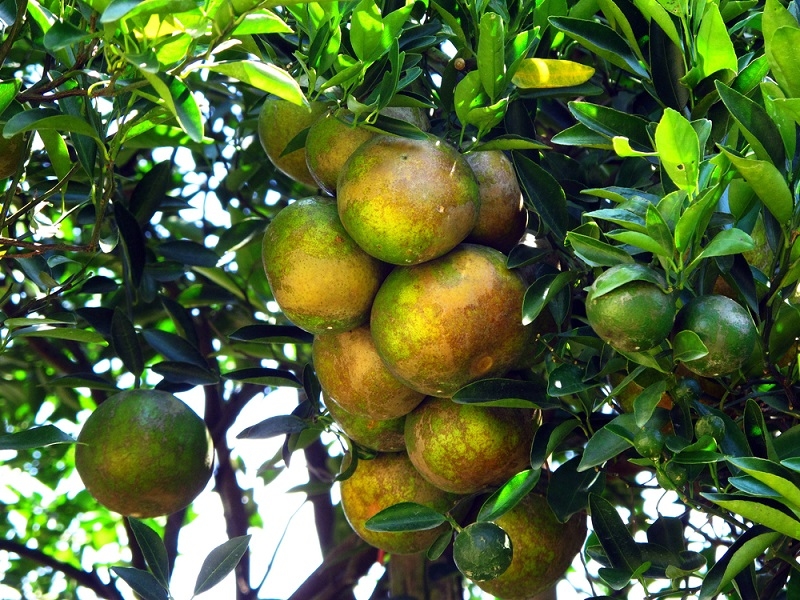
Citrus greening disease is a plant infection that slowly damages citrus trees and affects fruit quality. It spreads quietly and becomes serious before many people even notice the signs. The impact is long-lasting and difficult to reverse once it sets in.
This blog will help you find out what citrus greening disease is and its most common symptoms. It will also cover the top 5 treatments for citrus greening disease.
Citrus greening disease starts with bacteria getting into the plant through insects that eat leaves. The insects jump from one plant to another carrying the disease, but they do not show any symptoms.
The bacteria interfere with nutrient movement inside the tree after entering the body. This is a gradual process that makes it difficult for everyone to detect the problem early. The tree could be healthy for a long time before showing symptoms.
Must Read: Rust Fungus on Plants: Causes, Signs, and Easy Fixes
The following list will help you understand the common citrus greening disease symptoms:
Leaves may show patchy yellow areas instead of a uniform color. It does not look like normal aging. The pattern feels irregular and often spreads over time.
Fruits may grow unevenly and remain smaller than expected. Some may look lopsided. The taste can also change, often becoming bitter or unusual.
Branches may look thinner and weaker. Growth slows down, and the tree may not look as full as before. It gives a slightly tired appearance.
Leaves may fall earlier than expected. This reduces the tree's density and affects how it produces its own food.
The roots weaken slowly, which affects water and nutrient absorption. This leads to further decline in overall plant health.
Top Pick: Peonies Care Guide: Planting, Blooming, and Pruning Tips
You can check the following list to understand the top 5 citrus disease treatments:
When a tree shows strong signs of infection, removing it becomes necessary. Keeping it longer only increases the risk for nearby healthy trees. This step feels difficult, but it helps protect the larger area.
The insects that spread the bacteria need to be managed carefully. Regular observation and timely action reduce their movement. It does not eliminate risk completely, but it lowers the chances of spread.
Starting with clean and healthy plants creates a safer environment. This reduces the chance of introducing the infection from the beginning. It is one of the simplest but most effective steps.
Proper care, like watering, balanced nutrients, and good soil conditions, helps trees stay stronger. A strong tree may not completely resist the disease, but it handles stress better.
Regularly watching the trees helps catch problems early. Small signs can be easy to miss, so attention matters. Early action can slow the spread significantly.
You can check the following steps to prevent citrus greening disease:
Always begin with plants free of infection. This reduces the chances of introducing the disease at the start.
Look closely at leaves and fruits from time to time. Small changes can be early signs. Waiting too long makes things harder to control.
Insects carry the bacteria, and keeping them under control is important. Regular checks and safe control methods help limit their spread.
Healthy trees handle stress better. Proper watering and soil care support stronger growth and reduce vulnerability.
If any part of the tree shows clear signs, it should be removed without delay. This step protects nearby plants from being affected.
You should check below to find out the things you need to know about the citrus greening disease cycle:
The bacteria enter the tree when insects feed on the leaves. This is where the cycle begins, often unnoticed.
After entry, the bacteria spread through the internal system. This affects nutrient flow and gradually weakens the tree.
Signs begin to show slowly. Leaves change color, fruits develop poorly, and growth becomes uneven.
Insects feeding on infected trees pick up the bacteria and carry them to healthy ones. This increases the spread across the area.
The tree becomes weaker and less productive over time. If left unmanaged, it may stop producing usable fruit altogether.
Citrus greening disease takes time to manifest its effects on trees, but it can cause irreversible damage if left unchecked. Knowledge about the disease’s signs, prevention measures, and treatments can minimize its effects. Citrus greening can be controlled and kept at manageable levels through consistent observation and management, without causing additional problems.
Citrus greening is a bacterial disease that affects the flow of nutrients within a citrus tree. It results in the deterioration of fruit quality, poor growth, and eventual death. Citrus greening progresses gradually, making early diagnosis crucial for effective treatment.
There is no definite treatment for when the tree gets severely infected. There are some measures that could be considered, which would aid in slowing down the process and helping the tree recover its health. Sometimes it is better to remove trees with serious infections.
Some insects consume the affected leaves and spread the disease. As they go to other trees and start feeding there, they infect the plants, thus creating a continuous chain that can be controlled only if the insect population is brought under check.
This content was created by AI